Introduction
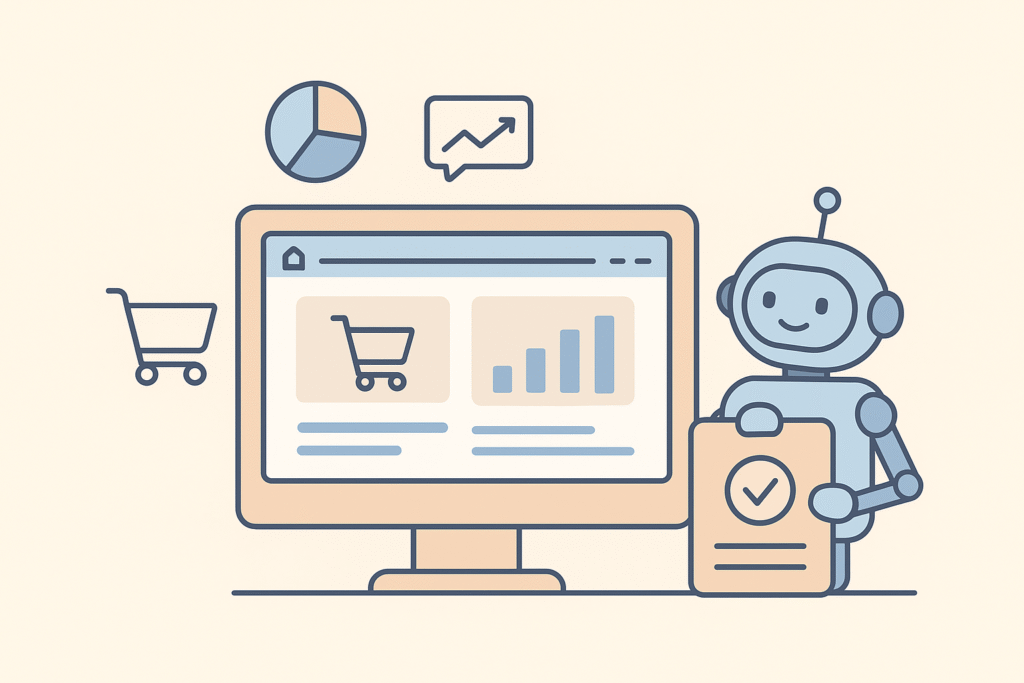
Imagine having a sales representative who never takes a break, never calls in sick, and never asks for a raise. That’s exactly what your website does in today’s digital world. While you sleep, spend time with family, or focus on growing your business, your website keeps working—welcoming visitors, presenting your value, and guiding them smoothly toward making confident purchase decisions.
I’ve seen countless business owners who still think of their website as just a digital business card. They’re missing out on one of the most powerful tools available today. An effective digital sales strategy transforms your website from a static information page into a dynamic selling machine that operates around the clock. It’s like having your best salesperson available to every potential customer, every minute of every day.
The beauty of this system lies in its consistency. While human salespeople have good days and bad days, your website delivers the same quality experience to the first visitor of the day and the last visitor at midnight. This constant presence has become essential in our always-connected world where customers expect immediate access to information and solutions.
The Website as a Silent Salesman

Just like a great salesperson reads a client’s needs and responds with confidence, an effective website anticipates user behavior and presents solutions seamlessly. Through layout, copy, and design, it builds credibility and guides visitors without human intervention — embodying the idea of a “silent salesman.
Key Ideas:
A top salesperson knows what to say, when to say it, and how to build trust.
A well-structured website replicates this process automatically.
Design, Copy, and CTAs Replace Human Interaction
Your website’s visual and written elements take the place of in-person sales cues. Clean design establishes trust, strategic placement of information directs focus, and CTAs prompt action naturally. These elements ensure visitors experience a logical, persuasive flow — turning curiosity into conversion through subtle, intentional guidance.
Key Ideas:
Website design communicates professionalism and credibility instantly.
Layout and content guide attention toward key benefits.
Calls-to-action appear at strategic moments, similar to how a salesperson asks for the sale.
The Psychology Behind Website Selling
Online users look for the same emotional reassurances they’d get in person. Trust badges act like a handshake, testimonials reinforce credibility, and intuitive navigation removes confusion. Together, these elements build comfort and confidence — essential components of any effective digital sales strategy.
Key Ideas:
Websites mimic human sales psychology using digital trust signals.
Elements like reviews, secure badges, and professional visuals substitute face-to-face reassurance.
Clear descriptions and easy navigation replace traditional conversation and guidance.
Core Mechanisms Behind Website Selling
Visibility — Getting Your Digital Salesman Found
The best salesperson can’t sell if no one can find them. Similarly, search engine optimization (SEO) ensures your website appears when potential customers search for solutions you offer. SEO isn’t about tricks—it’s about clearly communicating your expertise and relevance to both search engines and users.
When your site ranks for searches like “accounting software for small businesses,” that’s your digital salesman doing early prospecting before visitors even reach your homepage. Local SEO extends this by helping nearby customers discover you when they need fast solutions.
Many businesses rely heavily on paid ads and overlook organic visibility, yet organic traffic often earns more trust and brings higher-quality leads. In an effective digital sales strategy, SEO acts like a relationship builder—slow, consistent, and capable of creating long-term customer loyalty.
Engagement — Capturing and Maintaining Interest
Once visitors arrive, engagement determines whether they stay or leave. Design and copy must work together to attract attention and sustain interest. Every element should either guide users toward conversion or risk losing them entirely.
A professional design builds instant credibility, while intuitive navigation helps visitors find what they need quickly. Even a one-second delay in loading time can cut conversions by 7%, proving that your digital salesman must be as fast and responsive as your best human representative.
Engagement extends beyond visuals—your content should address visitor motivations and solve their problems. Use clear, benefit-focused language instead of jargon or lengthy company history. Add interactive tools like quizzes or calculators to provide immediate value and insights, much like a salesperson who qualifies prospects while showcasing product benefits.
Conversion — Turning Interest into Action
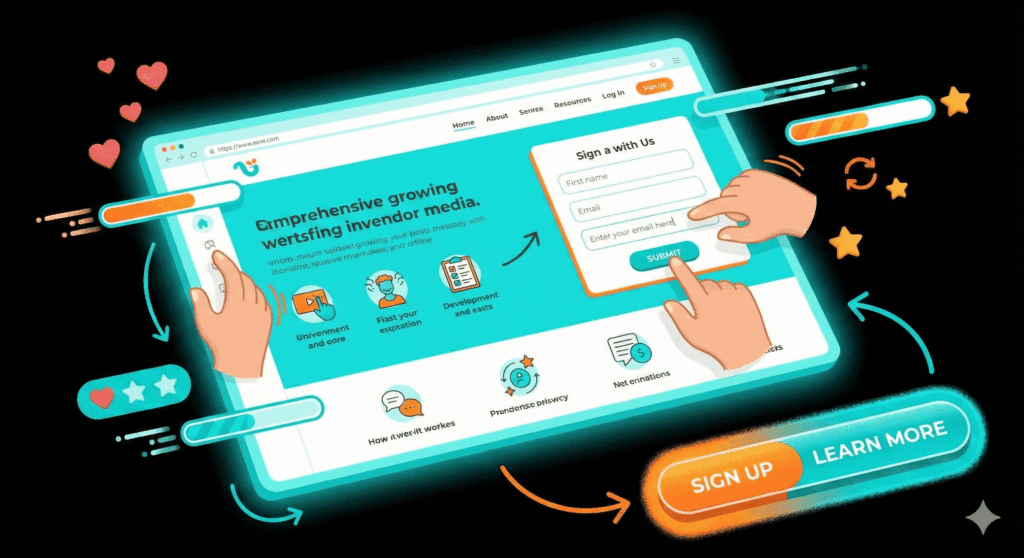
Conversion optimization is where engagement turns into measurable results. Structure and persuasion must align to transform interest into purchase. Every conversion element—from the first call-to-action (CTA) to the final confirmation—should flow seamlessly.
Strong, action-oriented language drives results. Replace vague CTAs (“Learn more”) with clear ones (“Get your free quote,” “Start your 30-day trial”). The conversion journey should feel natural and frictionless.
During this phase, trust signals are essential: security badges, money-back guarantees, testimonials, and social proof all reduce anxiety. Form optimization further supports conversion—short, simple forms encourage action, while progressive profiling gathers data gradually without overwhelming visitors.
Together, these elements make your effective digital sales strategy complete—turning engaged visitors into confident customers through clarity, trust, and smooth user experience.
When your site ranks for searches like “accounting software for small businesses,” that’s your digital salesman doing early prospecting before visitors even reach your homepage. Local SEO extends this by helping nearby customers discover you when they need fast solutions.
Many businesses rely heavily on paid ads and overlook organic visibility, yet organic traffic often earns more trust and brings higher-quality leads. In an effective digital sales strategy, SEO acts like a relationship builder—slow, consistent, and capable of creating long-term customer loyalty.
The Continuous Sales Cycle
Websites Improve Continuously
Unlike human salespeople, websites learn from every interaction.
Each visitor’s action contributes to optimization and performance growth.
Data-Driven Insights Enhance Effectiveness
Analytics tools track visitor behavior and engagement patterns.
Heatmaps reveal where users click or scroll most.
A/B testing compares page variations to boost conversions.
Together, these tools make your digital salesman smarter over time.
Automation Extends Sales Efficiency
Email sequences nurture undecided leads automatically.
Chatbots respond to inquiries and qualify prospects 24/7.
Retargeting campaigns re-engage past visitors with tailored offers.
Consistency and Personalization
Websites outperform humans in consistency—never forgetting details or changing tone.
They maintain accurate pricing, clear messaging, and can personalize user experiences based on behavior data.
Compounding Optimization Effect
Continuous improvements create a feedback loop of progress.
Small updates build upon each other, producing long-term growth in conversion rates and revenue.
Over time, your digital salesman becomes increasingly persuasive and efficient.
Conclusion
Your website is more than an online brochure—it’s a 24/7 sales representative that attracts, engages, and converts customers through proven digital processes. While you manage your business, it continuously generates leads and revenue.
By combining visibility through SEO, engagement through design and content, and conversion through user experience, your site forms an effective digital sales strategy that operates without pause. Successful businesses recognize this and invest in ongoing optimization, treating their website as a vital growth asset.
Remember: your website sells even when you don’t—ensure it represents your business with clarity, professionalism, and persuasive power.